Understanding RV Solar Power
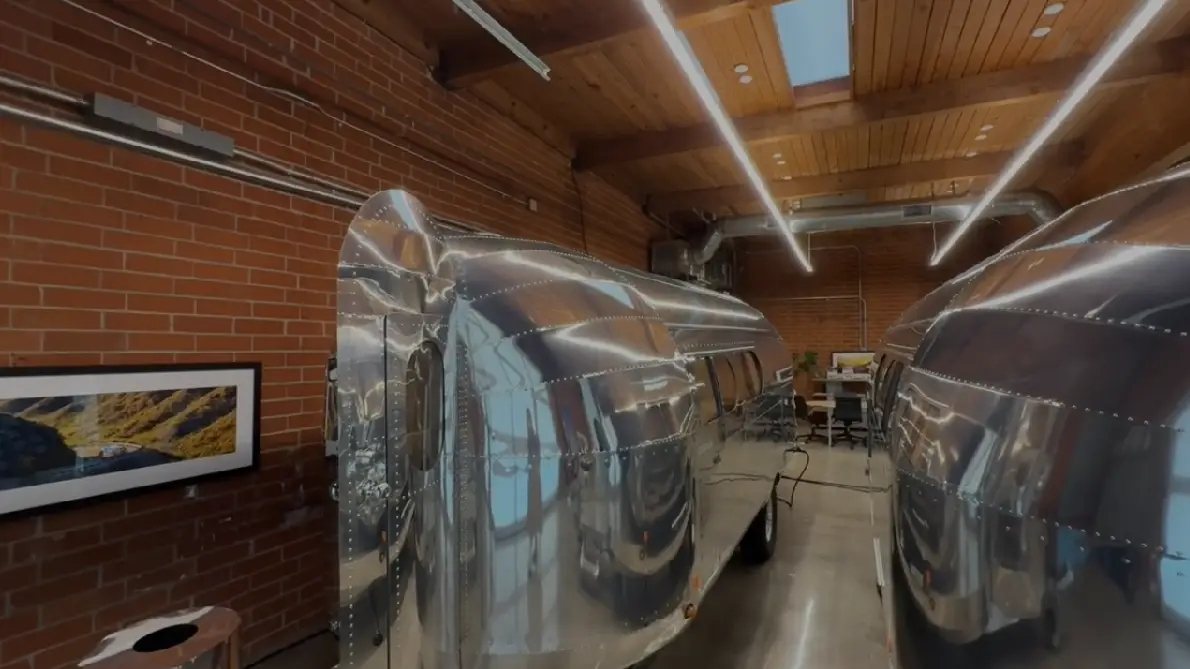
Unlock the Power of Solar for Your RV | Off-Grid Camping Tips
If you love parking your RV in scenic, off-grid spots, you’ve likely faced the challenge of limited battery power. While a generator can keep your rig going, it often drowns out the peaceful sounds of nature. That’s where solar and battery systems come in. In this video, we dive deep into how RV solar setups work and how Bowlus’ advanced systems make off-grid camping a breeze.
Key Components of an RV Solar System:
- Solar panels collect energy from the sun.
- Solar charge controllers, like Bowlus’ MPPT controller, efficiently manage solar energy to maximize battery charging—even on cloudy days.
- Inverters convert the stored direct current (DC) from your batteries into alternating current (AC) for powering your RV’s outlets and appliances.
- A high-quality battery bank, like Bowlus’ lithium iron phosphate (LiFePO4) batteries, stores all the energy you need.
We’ll discuss the difference between fixed and portable solar panels, why cooling and positioning your panels is important for maximum efficiency, and how Bowlus gives you the flexibility of both roof-mounted AeroSolar panels and portable panels for optimal solar capture at any campsite.
How Much Power Can You Generate?
We also cover power consumption estimates, and what you need to know about running your RV’s larger appliances like A/C, heating, and fridges while off-grid.
Whether you’re a boondocking enthusiast or just looking to make your RV life more eco-friendly, this video will give you everything you need to know about solar-powered camping. Watch now to learn how Bowlus integrates an efficient, hassle-free solar system into its RVs, making off-grid camping easier than ever.
FAQs
Video Transcript
Hi! I’m Geneva Long, CEO of Bowlus and if you’re one of those campers that loves to go camping at scenic off-grid camping locations, then this is the video for you! We’re going to be talking all about RV solar today and what you need to know and how to choose an RV that makes sense for your use case. Now, off-grid camping means that you’re camping at a place without any hookups and so if you’re going to camp in off-grid spots, the length of your stay is often limited by the size of your RV’s batteries because you don’t have any shore power input.
And shore power is hooking into the RV and obviously powering through either a shore power pedestal at a campground or an outlet. Without Shore power, you can use a generator to power up your RV instead of relying on your batteries but even the quietest generator models can really overwhelm obviously the sound of nature and that defeats one of the biggest selling points of boondocking is being out there. So we’re going to talk about solar and battery Systems today. Quick overview on solar and now we have solar on all three of the models here in our showroom today.
RV solar power works like the ones on your home, they soak up energy from the sun, they create the power you need to run your off-grid RV and the typical RV solar system needs solar panels, on the Bowlus they’re completely aerodynamic, so they can be a little hard to to notice. You also need a solar charge controller, an inverter and batteries and there’s many different types of solar panels on the market today but monocrystalline solar panels where each cell is a thin wafer of pure silicon crystal is the most efficient and also most expensive type of panel you can buy and those are the ones that we use on the Bowlus.
Now, the solar charge controller maximizes the energy by your solar panels so that they can properly charge your batteries and a maximum power tracking MPPT solar controller, like the one found in our integrated Bowlus power management system, are more efficient than standard solar controllers. It’s also more expensive but in a cost benefit analysis the MPPT wins every time and here’s why – the MPPT checks the output of the solar panel and compares it to battery voltage. The controller then fixes the highest power and converts it to the most appropriate voltage to get the maximum current of the battery. What this means is that you can gather more solar energy and keep your RV batteries charged, even on cloudy days.
Your RV solar system will also come with an inverter, the inverter’s job is to take that direct current, DC, generated by your solar panels stored in your batteries and convert it into alternating current, or AC, and AC is what you therefore need to power your RV’s 120 volt outlets and most of the appliances. The final component to your solar system is the battery bank, which stores all of the energy that your panels generate. There’s a lot of different types of batteries found in RVs, but we use lithium iron phosphate batteries and that is the best highest quality batteries that you can put in an RV. In fact those are usually found in the yacht world and using them in RV applications is just a really good idea because obviously yachts are meant to venture into the middle of the ocean, and so very reliable, very high quality, fast charging and also provide a lot more power per weight than the others.
That’s why every Bowlus starts with four kWh of lithium iron phosphate batteries and of course with the Endless Highways you can go all the way to 17 kWh of power in your Bowlus. And those batteries are contained inside the shell of the Bowlus, so let’s talk RV solar panels – Should you get fixed solar panels? Should you get portable solar panels? and if you’re buying a motor home, fifth wheel, or travel trailer that’s prepped for solar power that probably already comes with a solar system installed so you’ll find the panels are located on the roof. And on the Bowlus we have AeroSolar, which is incredibly aerodynamic. It’s also important that the solar panels are not attached directly to the roof and we see this all the time on other types of RVs and that’s because you know you need to have airspace so solar panels need to be able to cool as much as possible to generate maximum power. So we ensure that while the solar panels are aerodynamic and match that curve of the Bowlus, they’re also cooled with the airspace so it makes sure that the heat doesn’t get into the RV interior.
With roof mounted solar panels, you need your camper parked in the right spot to be able to maximize the energy that can be captured from the sun and it’s not always the most practical or desirable from a camping application. Now it is practical and desirable from a driving application, because of course you can be getting that solar absorption while you’re driving. But, to get around this limitation Bowlus does solar in two ways so first we have that AeroSolar, like I’ve been talking about which are the roof mounted solar panels, and then we also have the ability to use portable style solar panels like the one I have over here that can be plugged into the side of the Bowlus.
Those portable solar panels connect quickly and easily, and there’s a pre-wired input on the side of your Bowlus, so every Bowlus comes solar power enabled. We like the flexibility of the portable solar panels as well well it allows you to expand your solar absorption even more and as you can see this one folds in half so it’s not much bigger than a small suitcase and it stores in the closet of the Bowlus and then you can position that solar panel into the sun for the best absorption.
So now, let’s talk about running the inside of your RV with solar. So on a sunny day, Bowlus AeroSolar on the Endless Highways, and the Endless Highways has 220 watts of solar panels, can generate about 65 to 85 amp hours per day. AeroSolar on the Rivet, which is the model we’re in right now, that has 400 W of solar power and that can generate about 120 to 160 amp hours per day. The solar panels like we just saw outside, those ones that fold in half, can each generate about 40 amp hours per day. You can use up to two in every Bowlus model.
Just to give what regular consumption is as a comparison point, running the lights, monitoring panels, fridge, charging devices like computers, tablets, phones, the approximate consumption inside a Bowlus is about 50 to 60 amp hours a day. So no matter your setup, you’re going to be able to well generate on a sunny day more than you’re using with regular daily use. Now if you plan on using larger appliances, like the air conditioning, and that’s an air conditioner vent right there, or the electric heating off the batteries, lots of other ways to do heating as well propane, shore power. A/C can do shore power of course too.
Now if you plan on using larger appliances like the air conditioning or heating on electricity, you’ll either need to use your battery or shore power to power these. The absorption from solar will never be enough to make up for the larger power of these appliances, on any RV! If you’re off camping and want to use air conditioning, no problem! So you can option the Endless Highways up to 17 kWh or 1320 amp hours of power and then you can run the air conditioner from the batteries for up to 32 hours.
For longer air conditioning off- grid use, we do recommend a small and lightweight 2200W, 15 amp generator and of course, if you have shore power, either 15 amp or 30 amp, again very unique for an RV that you can run that air conditioner off of 15 amp, then you simply would plug into shore power to run your appliances as well. As important as solar is what really matters is the entire power system and the battery size that’s integrated with it and the Bowlus is a lightweight RV designed for hassle-free off-grid use.
So it’s really important to think about solar not just as a separate thing that you can add on, but really as part of a fully integrated system that involves choosing the right batteries, the right size of batteries, the right size of inverter, the right appliances that go within that system, it really is a holistic system rather than a bunch of parts put together. So some things to consider! Let us know if you have any questions you can reach out to us at www.bowlus.com or by email at sales@bowlus.com.