Comparison: Class B Vans and Bowlus Travel Trailers
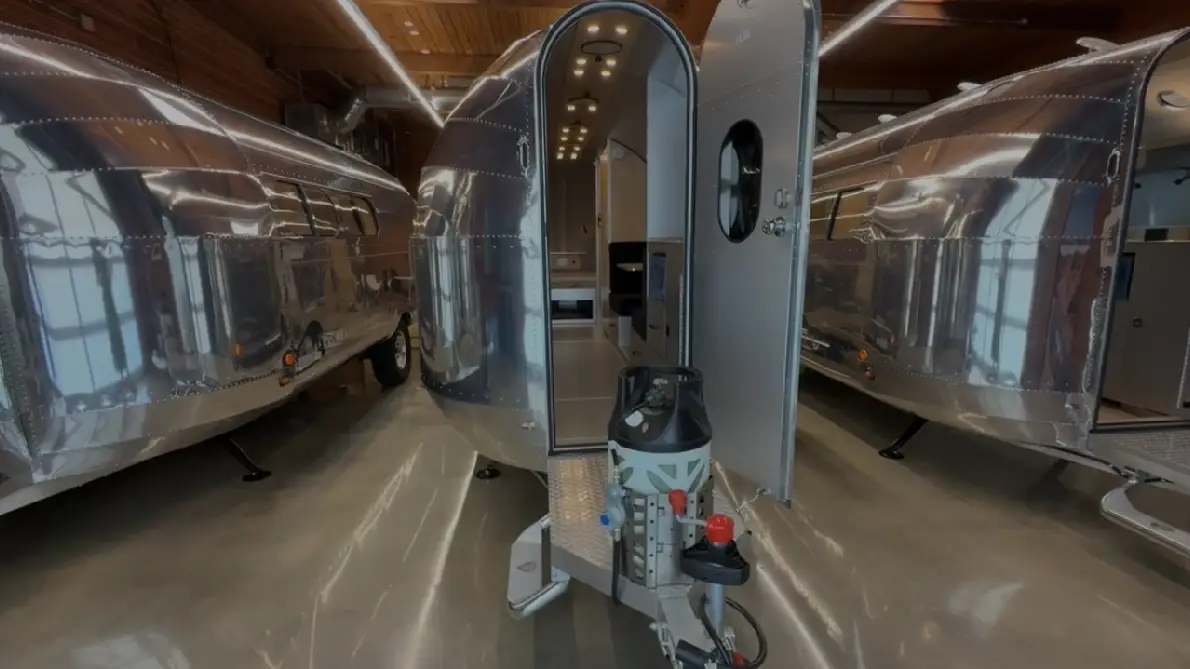
Tired of overcrowded RV parks and hard-to-book campsites?
Off-grid camping offers the freedom to explore remote, stunning locations—without relying on traditional hookups. In this video, we break down what off-grid camping really means, where you can go, and why the right travel trailer makes all the difference.
At Bowlus, we design the world’s most advanced off-grid travel trailers—so you can explore further, stay longer, and enjoy luxury wherever the road takes you. With industry-leading battery life, solar capability, and all-electric systems, every Bowlus is engineered for true off-grid performance.
Learn how Bowlus compares to traditional RVs, why off-road isn’t the same as off-grid, and how to unlock a new level of independence and comfort on your adventures.
FAQs
Video Transcript
Hi! I’m Geneva Long, CEO of Bowlus, and today I want to talk all about Bowlus versus van conversions and what might be the best choice for you and what might be some things that you should be considering. Let’s flip the camera around and get started.
It makes sense at first look as to why a lot of people are comparing something like an aerodynamic smaller lightweight travel trailer with something like a van conversion. They both feel comfortable to drive, they can both get into places like national parks and state parks, and some van conversions are built for off-grid use. Although most of them are built for off-grid use with generator use, which we’ll cover a little bit later, I can see why people are comparing the two together.
Now let’s get started with the first advantage of a Bowlus over a Class B van, and that’s drivability. First of all, I don’t know if you’ve had the opportunity to drive a Class-B van before, but if you haven’t, I always recommend that you go take that for a test drive just to see what it’s like. The Class-B van has a really high center of gravity, flat sides, and obviously not an aerodynamic shape, so that’s in very steep contrast to what a Bowlus is all about.
We have that aerodynamic shape where the front of your Bowlus is the same width as your tow vehicle, and what that means is anywhere your tow vehicle can go, your Bowlus follows in those tire treads behind you. The Bowlus has a really low center of gravity which translates into better handling; so crosswinds, defensive driving, stopping, and accelerating—all of that is easier in something with a low center of gravity. Feel free to check out my other video of us driving in 70 mile per hour winds just to prove out what that looks like for you.
Also with a Bowlus, you have the ability to use a vehicle you already likely own to tow your Bowlus. With the Rivet, which is what we’re looking at right now, that has a 3,500 pound GVWR. Our Endless Highways has a 4,000 pound GVWR, and you probably already own a vehicle that can tow both of these, which means there’s no need to purchase that extra vehicle with an engine. It also means you are able to tow with a comfortable car, and it’s, quite frankly, more fun to drive. I think that’s one of the chief complaints about vans is they’re not very fun to drive. A lot of that has to do with the flat sides so wind, when it comes over, is just hitting against those flat sides versus with a Bowlus, it’s going up and over, so it’s just a very different driving experience.
One of the other things I love about the Bowlus is once you get to your campsite, you can set everything up and then you can just leave your Bowlus at your campsite and take your tow vehicle to go explore nearby destinations. One of the disadvantages with a van, of course, is that it’s in the same vehicle, and so if you set up camp and you realize that actually you’d like to go 20 minutes over here or an hour over there to check something out, the whole van has to be packed up and you have to move on your way.
So those are the key drivability differences for me. Now let’s talk about the floor plan. In a van, you don’t have a separate bedroom; you don’t have that ability to close off the doors from the living room and have a separate area. I’m just going to close that door so you see our bedrooms in the back and bathrooms here. Feel free to watch my walkthrough videos if you haven’t before, but I’m just going to close this door off from the living room just to show you. That’s really nice from a practical point of view because if one partner gets up later than the other, or you have two kids or two friends sleeping out here, everyone has their own separate space, which is not something you can have in a van.
In a van, you have very little living space without maybe swiveling the chairs around, whereas you have a whole separate living room inside here. Vans also have very little storage, and all of that storage tends to be up high. If you do get claustrophobic, a van is usually not a great pick for you because everything tends to be right in your face, whereas in a Bowlus, we don’t have anything storage-wise up in your face while you’re standing—everything is down low. And again, low center of gravity—I think we’ve already talked enough about that.
Also in a van, you usually have a wet bathroom, and so that means you’re usually sitting on the toilet while you’re showering. This is our smallest floor plan here in the Rivet, which is why I picked it, just to show you that even in our smallest floor plan you have a separate toilet and shower. Many years ago, Bowlus actually did have a wet bathroom and we designed away from that because it just wasn’t very luxurious. Having that separate toilet space means that your toilet isn’t getting wet. In vans, you usually have to put your toilet paper in a waterproof container and all of your toiletries are getting wet; you basically have to treat it like your whole bathroom will be getting wet, versus in a Bowlus you have that beautiful separate shower and the seat—which is not the toilet seat—that you’re sitting on, so it’s a very different type of experience.
We’ve also had lots of owners that have owned van conversions in the past that have upgraded to a Bowlus. They have told us it’s actually very hard to even get dressed inside a van if you don’t have the person you’re traveling with move to the side because your arms basically get in the way—there’s just not enough room for that. Also something to consider: we talked about the advantage of having that separate bedroom, but it’s also a real advantage to always have the bed set up. That means the bed is actually a bed—it’s not a seat that you’re converting into a bed for the night. It’s not something you have to set up at the end of the night; it’s something that’s always set up and ready to go for you in that separate bedroom.
This is not just an “RV king,” and that’s what you’ll see many times in RVs—they’ll call them things like “RV queen” or “RV king”—and if you actually look into the dimensions, they’ll be about 12 inches more narrow than your regular king or regular queen. This is especially true if the bed goes East-West, where the head of the bed would be on the port side and the feet on the starboard side, rather than in a Bowlus where you sleep this way—head towards me usually, feet towards the tail. It’s just much more comfortable. Our Bowlus bed is 6’8” in length and 80 inches wide at the top, so those are true king dimensions. Obviously, it does taper in that boat-like tail for those aerodynamic reasons.
What’s also kind of an insider piece of information is that in the RV industry, van conversions are typically called “Hotel Hoppers.” That means they’re really meant to go from one hotel to the next, and of course, they serve a purpose for specific activities and transporting lots of people around. But in terms of that camping experience, it’s better suited to maybe one person, usually not two people, and obviously involves a lot of compromises.
In terms of the power system, and we touched on this a little bit earlier, the Bowlus power system has up to 17 kWh of energy and you can run the air conditioner, the outlets, and all the appliances inside off the battery—so that’s a huge advantage. You’ll see van conversions talk about off-grid use, but usually it involves using a generator. There’s a whole host of reasons why you don’t always want to be relying on a generator—first of all, noise—but second of all, a lot of the generator rules around State and National Parks are important to consider. You are wanting to find something that’s made for off-grid use if you’re looking to adventure in State Parks, National Parks, farm stays, or golf stays—a whole host of really unique, amazing camping experiences that are a little bit different than the traditional luxury campsite or campground type of vacation.
Another thing to consider with vans is, of course, maintenance. Because there’s an engine, it’s another vehicle to maintain, and then there’s the depreciation. Just like a car, the minute you drive that Class B or Class C van off the lot, it’s worth a lot less than you paid for it. I think there’s also this thing with vans where, because there’s a different badge on the front—and sometimes that’s a Mercedes badge—it’s assumed that quality trickles down all the way into that van build, but that’s simply not the case.
Most vans are still built exactly the same way that all other RVs are made, which is, unfortunately, usually as cheaply as possible with lower quality materials. You won’t find materials like real wood or polyiso insulation like you find inside a Bowlus. They really are at a different quality level, even though you’ll still find that van at a very similar price level. I guess that’s just all to say is don’t necessarily let that Mercedes badge fool you; it’s still largely made like an RV. To understand that, you really need to learn about how they’re made and the different types of quality and materials that go into making the RV that you choose.
I will also link our factory videos so that you can see how a Bowlus is made. If you have any other questions about considering a van versus a Bowlus and what might fit your use case, please feel free to contact our sales team. We’d love to hear from you at www.bowlus.com or sales@bowlus.com.