EV Towing Test with the Adventure Package
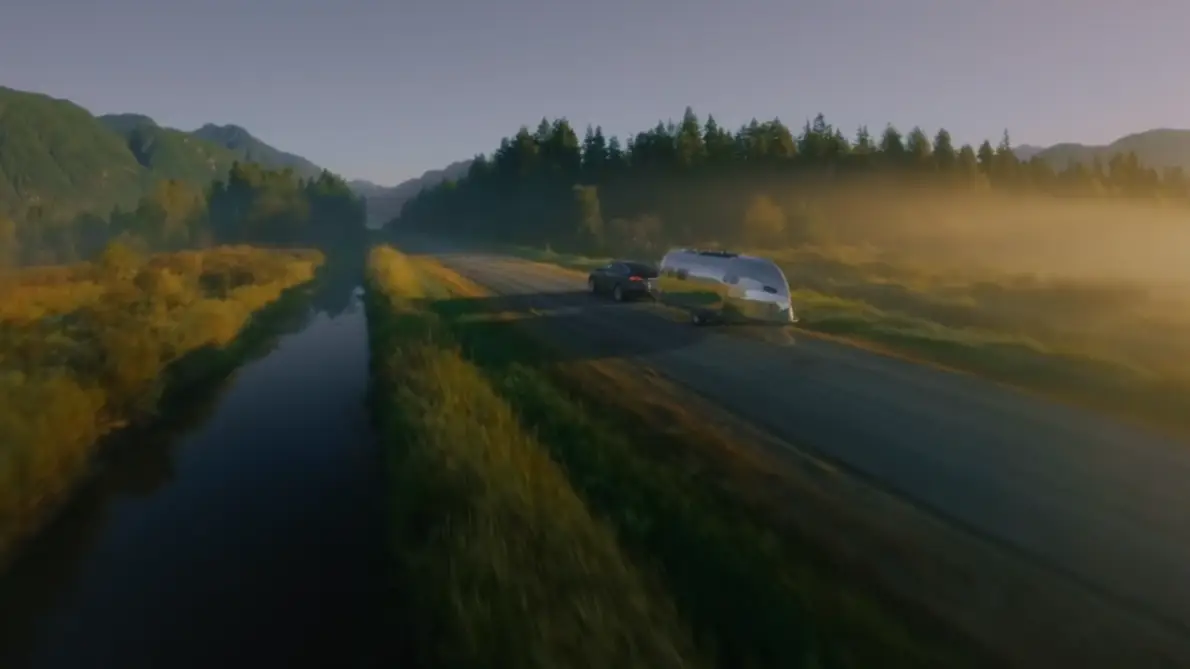
Bowlus Adventure Package vs. Standard: EV Range Efficiency Test Results
In this video, we compare the 2025 Bowlus Endless Highways with the Adventure Package to the standard Endless Highways model. The Adventure Package includes a 3″ lift and all-terrain tires, ideal for off-road adventures, but how does it impact energy efficiency?
Key Differences
- Adventure Package (Lifted Model)
- 3″ higher ride height
- Wider, lower-pressure Goodyear Wrangler Duratrac all-terrain tires (50 psi)
- Open fender design
Standard Model (Non-Lifted)
- Lower frontal profile for improved aerodynamics
- High-pressure Goodyear Endurance tires (65 psi)
- Enclosed fender skirts to optimize wind flow
Test Results
- Lifted Bowlus: Consumed 26 kWh for a 48-mile loop
- Non-Lifted Bowlus: Consumed 25 kWh for the same loop
- This reveals a 4% increase in energy consumption for the lifted model.
Test Methodology
The test was conducted on a 48-mile round trip between Santa Barbara and Gaviota. Both trailers were towed in both directions to account for wind conditions.
Insights
The Adventure Package’s design adjustments, including increased height and tire type, slightly reduce aerodynamic efficiency. This test suggests a 4% energy consumption increase for electric tow vehicles like the Tesla Model X. Results may vary with other EVs.
Watch the full video for more details and insights on how the Adventure Package performs in real-world scenarios.
FAQs
Video Transcript
Hi, I’m Geneva Long, CEO of Bowlus. We’ve recently been receiving a lot of questions regarding the difference in EV range between our Adventure Package Bowlus—which features a 3-inch lift—and our non-lifted models. We just finished testing these two configurations, and I’m excited to share the results with you.
For our testing, we compared a 2025 Endless Highways equipped with the Adventure Package against a standard 2025 Endless Highways. The Adventure Package includes a 3-inch lift and all-terrain tires, whereas the standard model features a lower profile, high-pressure Goodyear Endurance tires at 65 PSI, and enclosed fender skirts to assist with wind flow. In contrast, the lifted Bowlus sits 3 inches higher, creating a larger frontal area exposed to the air above the tow vehicle. It also utilizes wider, lower-pressure Goodyear Wrangler Duratrac tires at 50 PSI and lacks the full wheel fender skirt covers.
To get the most accurate data, we conducted a 48-mile test loop from Santa Barbara to Gaviota and back using a 2020 Tesla Model X. Each trailer was driven in both directions to account for wind variability. The results were impressive: the lifted Bowlus consumed 26 kilowatt-hours of energy to complete the loop, while the non-lifted Bowlus used 25 kilowatt-hours. This means the Adventure Package resulted in an energy consumption increase of only about 4%.
While figures may differ slightly from one EV to another, a 4% reduction is not a significant loss for electric vehicle towing. Even with the lift, the Bowlus maintains the best EV range of any travel trailer—whether in production or in the concept stage. This efficiency is a testament to the Bowlus’s extraordinary aerodynamics and lightweight design. Because the frontal surface area is already curved, the additional three inches of exposure has a minimal impact on overall performance. Both versions are phenomenal choices for EV owners, no matter where your adventures take you. Let us know if you have any other questions in the comments!